

The House Nobody Is Living In Is the One They Try to Sell
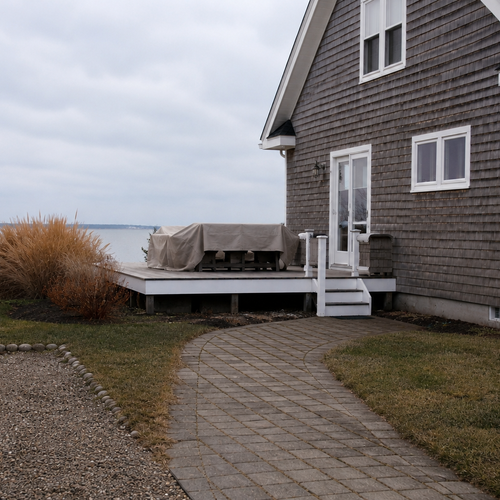
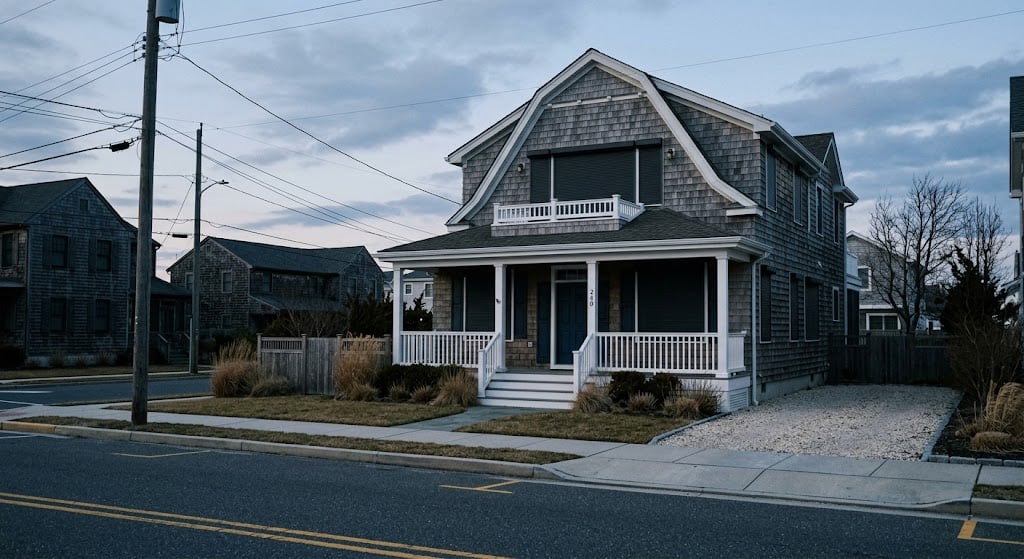
Picture a quiet street in Lavallette in February. Most of the houses are dark. One of them belongs to a family that comes down Memorial Day through Labor Day and not much in between. A neighbor drives past and notices a For Sale sign in the yard. That is strange, because he had coffee with the owner in August and she never said a word about selling.
He calls her. She has no idea. She never listed the house. She never spoke to an agent. And somewhere out there, a stranger has spent three weeks emailing back and forth with a real estate office pretending to be her.
That scenario is made up, but the scam behind it is not. It is called seller impersonation fraud, and it has become organized enough that the title insurance industry now builds products around it. We think every homeowner in Monmouth and Ocean County should understand how it works, because the shore is exactly the kind of place these people go looking.
How the scam actually works
It is simpler than most people expect. Property records are public. Anyone can look up who owns what, whether there is a mortgage on it, and where the tax bill gets mailed. From there, someone reaches out to a real estate agent by email posing as the owner.
The story tends to follow a pattern. The owner lives out of state now. They want to sell quickly. They cannot get on the phone, but they will handle everything by email and text.
The property gets listed, often a little under what it is really worth, because the goal is a fast close rather than top dollar. A buyer comes along, frequently a cash buyer. Closing gets scheduled. The seller asks for a remote notary, sometimes one of their own choosing. Documents come back signed. Then the proceeds get wired out, and the real owner is still sitting in Florida with no idea any of it happened.
The identification piece is what surprises people. This is not always a sloppy operation. The American Land Title Association has warned that these schemes use the real owner's Social Security and driver's license numbers, along with legitimate notary credentials that are sometimes applied without the notary's knowledge. Title industry executives have also described organized rings using AI-generated video and forged identification to get through verification steps.
It is worth saying that a lot of this gets caught. ALTA reported that in 2023, twenty eight percent of title companies saw at least one attempted seller impersonation, and many of those attempts were stopped by title professionals doing their job. This is not a reason to panic. It is a reason to understand where the weak points are.
Why our area gets attention
Seller impersonation needs a property that nobody is watching closely. Down here, we have plenty of those, and none of it is because homeowners did anything wrong.
Seasonal homes sit empty eight months of the year. Vacant lots sit for decades while a family decides what to do with them. Inherited properties sit in limbo while siblings work things out. Long-time owners who paid off the mortgage years ago have no lender sending them statements, which means one less set of eyes on the property record.
Owners who have held the same house for decades draw particular attention, and it is worth saying plainly to anyone reading this who has parents down the shore. If your mother owns a house in Brick free and clear and spends the winter in Florida, that is a property worth checking on.
The free thing every owner should do this week
Both of our counties already offer a property alert service at no cost, and most homeowners have never heard of it.
In Monmouth County, the Clerk's Office runs its Property Fraud Alert through propertyfraudalert.com, and the sign-up link sits right on the Clerk's website under Property Fraud Alert. You register your name, and you are notified by email or phone whenever that name shows up in a recording at the Clerk's Office.
In Ocean County, the Clerk's Office runs its own Property Alert Service at countyclerkpas.co.ocean.nj.us. You create a login, confirm by email, and then register your property by municipality, block, and lot, and you can also register party names. Alerts come by email. If you do not know your block and lot, it is on the assessment postcard you get every year, or you can look it up on the Ocean County Tax Board search site.
Two details matter when you sign up. Ocean County asks for names last name first, and every variation has to be entered separately, so Smith John, Smith John A, and Smith John Allen are three separate entries. And if you own property through a trust or an LLC, register that entity name too.
Understand what this service is and what it is not. It tells you when something has been recorded. It cannot stop something from being recorded. Under New Jersey law, if a document meets the statutory recording requirements, the county clerk has to accept it. What the alert buys you is time, and time is most of the battle here.
About those title lock commercials
You have seen the ads. Somber voice, dramatic music, your home is one signature away from being stolen.
Here is the honest version. The Federal Trade Commission put out a consumer alert in August 2024 titled "Home title lock insurance? Not a lock at all." Their point was direct. Title lock insurance is not title insurance and is not insurance at all. It is a monitoring service, and you would only find out after your title had already been transferred without your authorization.
So the better questions are these. Have you signed up for your county's free alert service, which does much of the same monitoring at no charge? And what kind of owner's title insurance do you actually have?
That second one is worth a phone call, because the coverage is not what most people assume. A standard owner's title policy generally protects against problems that existed before your closing date, such as an old lien or a defect in the chain of title. Forgery that happens years after you close has historically been excluded. The enhanced version, the ALTA Homeowner's Policy, includes post-policy forgery coverage, and in New Jersey buyers are offered a choice between standard and enhanced coverage at closing. Many people took one or the other without ever registering the difference.
In August 2025, ALTA also published two new endorsements, ALTA 49 and ALTA 49.1, specifically for post-policy deed and mortgage forgery. The 49 is for someone buying a new owner's policy, and the 49.1 is for a homeowner who already has one and wants to add the coverage going forward. Endorsements require state-by-state regulatory approval, so availability varies. Call the title company that handled your purchase, ask which policy you have, and ask whether those endorsements are available to you in New Jersey. Confirm the specifics with them rather than with us or with an article on the internet.
The other simple habits
Keep your mailing address current with the tax assessor so notices about your own property actually reach you. If you are away for months, forward your mail or have someone collect it, because a lot of this starts with mail nobody is reading.
Ask a neighbor or a property manager to look at the place occasionally. Unfamiliar mail, unexpected For Sale signs, and people you do not recognize going in and out are all worth a phone call.
Once or twice a year, pull up your property in the county records and make sure the deed still reads the way it should and that no mortgage or lien has appeared that you did not put there. It takes ten minutes.
What DeFelice Realty Group does about it, and what we ask of you
We verify who we are working with. That means meeting sellers in person when we can, confirming identification, being careful when a seller will only communicate by email, and paying attention when the story around a sale does not quite hold together. A seller who can never get on the phone, wants an unusually fast cash closing, insists on a remote notary of their own choosing, and asks for proceeds to go somewhere unexpected is a pattern, not a coincidence.
If we ask you for identification on your own listing, please do not take it personally. That step is not about doubting you. It is the step that protects you, because the day someone tries to sell your house without you, the agent asking questions is the reason it does not work.
Buyers, this matters to you too. Walk the property in person before you go far into a deal. If nobody can arrange normal access to a house that has sat empty for years, that is worth slowing down for, not speeding past.
And if something has already happened, move quickly. Call a New Jersey real estate attorney, file a police report, notify the county clerk, and report it to the FBI's Internet Crime Complaint Center at ic3.gov. New Jersey courts have generally treated a forged deed as void from the start, meaning the person who forged it never legally owned anything. That is genuinely good news, but undoing the paperwork still takes a court action to quiet title, and that takes a lawyer and time. The sooner you start, the less there is to unwind.
One last thought
Most people spend more time protecting a credit card than the deed to the largest asset they own. That is not carelessness. It is just that nobody ever told us the deed needed protecting.
If you do one thing after reading this, sign up for your county's alert service, and then send this to whoever in your family owns the quiet house that sits empty half the year.
Check out this article next