
When you've spent time in real estate on the Jersey Shore, you learn to recognize which deals are actually deals and which ones are just problems dressed up as opportunity.
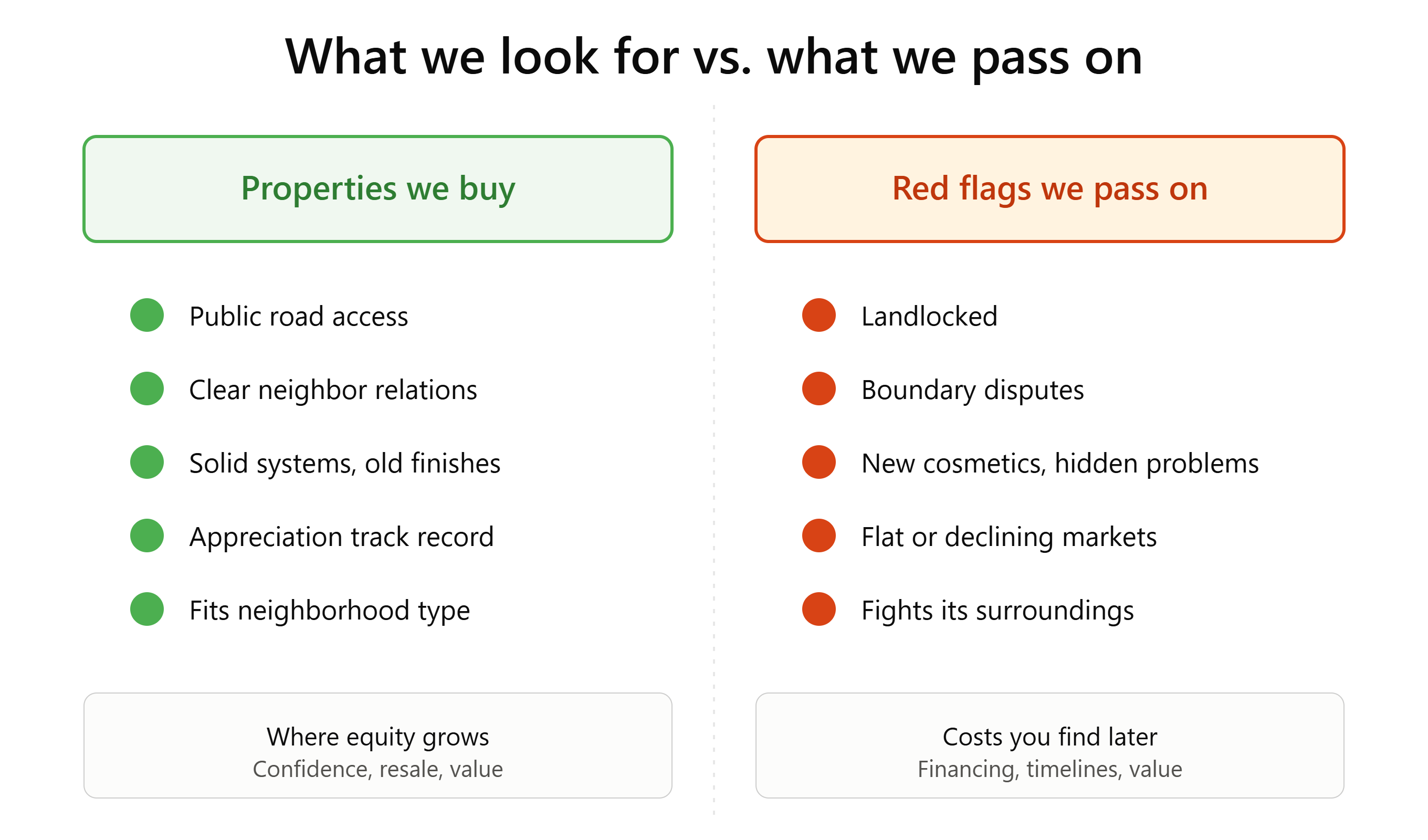
We see inventory move through our market every week, and there are five categories of homes we've learned to walk away from. It's not because we're picky. It's because we know what happens to them three, five, ten years down the road. And we protect our clients from those futures.
1. Landlocked Properties
A landlocked property has no public road access. You get to it through someone else's driveway, or you don't get to it at all.
This seems obvious when you're standing on the lot, but the real damage shows up at financing and resale. Banks hesitate on landlocked properties because they can't guarantee emergency vehicle access. That matters for insurance too. Some insurers won't cover them.
Even if an easement exists on paper, you're buying someone else's goodwill along with the deed. Easement disputes are expensive and they happen. We've watched properties sit on the market for years because buyers who initially loved the location realized they couldn't borrow against it.
In a market like ours, where waterfront and community access matter to buyers, landlocked is a structural problem that cosmetic upgrades can't fix.
2. Homes Caught in Neighbor Disputes
This one is harder to see from the outside, but the damage is real.
Maybe the boundary line has been contested for years. Maybe there's a shared driveway that one neighbor has decided they want exclusive use of. Maybe noise complaints have been filed. Whatever the specifics, the dispute is documented, it gets disclosed, and future buyers know about it.
We've sat with sellers who had beautiful properties and couldn't understand why buyers kept walking. The house was fine. The house was great. But the neighbor situation wasn't. One buyer's dream home becomes another buyer's daily frustration.
Disputes affect resale value and they extend timelines. A property in a boundary dispute can take months longer to sell, and buyers factor in legal costs they might face. It's not rational, but it's real. And it's not something a price reduction fully solves.
3. Cosmetic Renovations Over Structural Problems
This one has gotten more common as more properties get flipped.
You walk into a home with fresh paint, new floors, updated kitchen. Everything looks new. Then the inspection happens, and the report comes back with foundation cracks, roof patches held together with sealant, water damage under the new carpeting, or support systems that are questionable.
What you're looking at is someone who invested significantly in cosmetics to mask much larger structural costs.
The sloping floors. The doors that stick even after they're new. The faint smell that air freshener isn't quite covering. These are symptoms, not problems. Fixing the finishes doesn't fix what's underneath.
We look for homes where the systems are solid and the cosmetics need work. That's the inverse of what most flipped homes are selling you. A professional inspection is non-negotiable here, and if the report shows structural movement or unresolved water damage, we keep moving.
4. Properties in Locations That Don't Recover Value
Some real estate doesn't appreciate. Not because the house is bad, but because the location has constraints that hold value back.
Flood-prone areas. Properties with visibility or access issues that limit use. Locations adjacent to busy roads or industrial zones. Areas where inventory keeps growing but buyer interest stays flat.
We work in Ocean and Monmouth Counties, and we know which neighborhoods perform and which ones sit. We pay attention to what gets listed and how long it stays listed. We watch what sells and what gets relisted six months later with a price cut.
Buying in one of these zones means betting against what the market data shows. You're hoping you'll be the exception. Historically, you're not.
5. Homes That Fight Their Neighborhood
Every neighborhood has a type. A price point. A size range that feels right to buyers in that area.
A small house in a sea of four-bedroom homes doesn't appreciate like the larger properties around it. A massive new house on a small lot in a neighborhood of modest homes doesn't recover the premium the owner paid. Odd-shaped lots, homes that face the wrong direction, properties that don't follow the neighborhood pattern, they all create friction in resale.
The market has a price ceiling per neighborhood. Buyers in that area are willing to pay X, and when you try to get X plus a premium because your house is different, you end up selling at X anyway. You just spend three months longer waiting for the one buyer who happens to want what you're selling.
We focus on properties that sit comfortably in their neighborhood context. That's where appreciation happens and where resale happens cleanly.
What We Look For Instead
This isn't negativity. It's strategy.
We buy properties where public road access is clear and simple, no neighbor disputes show up in records, systems are solid and cosmetics are the work that's needed, the location has a history of steady appreciation, and the home fits naturally into its neighborhood.
The Shore market is strong because we know it deeply. We know which properties will hold value and which ones will drag down returns. That knowledge is what we bring to our clients.
If you're looking at a property and you're unsure whether it's one of these five categories, talk to us first. We've made these decisions thousands of times.
Check out this article next