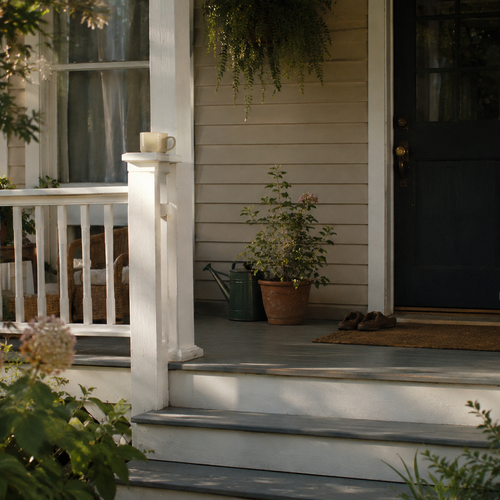



Picture this. You find the home. The neighborhood is immaculate. The lawns are trimmed, the streets are quiet, the community pool is three minutes from the front door. You make the offer. You close. You celebrate.
Then, six weeks later, you decide to repaint the shutters. You pick a color you love. You hire the painter. And two days after he finishes, you get a letter.
That letter is from your HOA. And it is just the beginning of a conversation nobody prepared you for.
The Document Nobody Reads Until It's Too Late
Every HOA-governed community runs on a legal document called the CC&Rs, which stands for Covenants, Conditions, and Restrictions. It is recorded with your deed. It is binding from the day you close. And in most cases, buyers receive it during the transaction, flip through it briefly, and set it aside.
That document is the HOA. Not the monthly fee. Not the pool. Not the friendly board president who waves at you from the driveway. The CC&Rs define what you can and cannot do with the property you just paid for, and the authority they carry is substantial.
New Jersey courts consistently uphold HOA architectural restrictions. If the governing documents say you need approval before painting, a judge is unlikely to take your side because you felt the rule was unreasonable.
The Outside of Your Home Is Not Entirely Yours
This is the part that catches buyers off guard. Most people assume HOA authority covers shared spaces, common landscaping, the clubhouse rules. What they do not expect is how far that reach extends to the exterior of their own home.
Here is what typically requires written approval before you do anything:
Exterior paint — Even repainting the same color. Most associations require the exact manufacturer color code submitted in advance.
Roof or siding replacement — Same material, same color. Still goes through the approval process.
Fences — Material, height, and style are all regulated. Many New Jersey communities specify wood, vinyl, or wrought iron only.
Decks and patios — Permanent materials at any level usually trigger a formal review.
Sheds — Size, color, placement, and materials. Some communities prohibit them entirely.
Landscaping changes — Newer communities often maintain a pre-approved plant list. Put in the wrong tree and you may be asked to remove it.
Vehicles in the driveway — RVs, boats, and commercial vehicles are frequently restricted from street view.
Holiday decorations — Some associations specify exact take-down dates.
Garbage cans — Left visible past a certain hour, that can be a violation.
If the architectural review committee decides you moved forward without approval, they can require you to undo the work. At your expense. That includes structures you already built and paint you already paid for.
Where HOAs Actually Have Less Power Than You Think
Solar panels and satellite dishes are the two areas where homeowner protections are clear and enforceable. New Jersey law gives homeowners strong legal standing to install solar panels. An HOA can request specific placement or weigh in on visibility, but cannot block the installation outright. Federal telecommunications law extends the same protection to satellite dishes. The HOA can ask you to position the dish out of street view if reception still works from that location. What they cannot do is tell you no.
So Why Do People Buy in HOA Communities?
Because the trade-off is real, and for many buyers it makes sense.
A well-run HOA means the neighborhood around your home stays consistent. No one parks a rusting boat trailer in their front yard for eight months. No one lets the lawn go. No one decides to paint their house the color of a fast-food sign. When you go to sell, the surroundings reflect the same standards that were there when you bought.
The amenities matter too. Pools, fitness centers, walking trails, gated access. If those things fit how you live, the monthly fee pays for itself. If they do not, you are still paying for them.
And research backs up what most experienced agents already know: well-managed HOA communities tend to hold and grow property value more reliably than comparable non-HOA neighborhoods. In Ocean County's 55+ communities and along the waterfront in Monmouth County, HOA structure is often precisely what keeps those neighborhoods worth buying into over time.
What to Ask Before You Sign Anything
Get the CC&Rs before you make an offer. Not at the closing table. Before.
Read them, or sit with someone who can walk you through what matters. Then ask these questions directly:
What is the monthly fee, and when was it last increased? What is in the reserve fund, and is it adequately funded? Have there been any special assessments in the past three years? What does the exterior modification approval process look like, and how long does it typically take? Are there any active disputes or pending rule changes?
A special assessment is a one-time bill sent to every homeowner when the reserve fund cannot cover an unexpected cost. It can arrive without warning and run into thousands of dollars. Asking about it before you buy is not pessimism. It is just good homework.
Our Honest Position at DeFelice Realty Group
HOA communities make up a significant share of the market in Monmouth and Ocean County. Some of our clients live in them happily for years. Others have come to us after realizing the restrictions were more than they bargained for. In both cases, the outcome came down to how thoroughly they understood the governing documents before they committed.
Our job is to make sure you are not surprised by a letter six weeks after closing. The right time to have questions about an HOA is before the contract is signed, not after the paint is dry.
A well-run HOA in the right community is a genuine asset. The key word is well-run. And the only way to know what you are getting into is to read what you are agreeing to.
Check out this article next